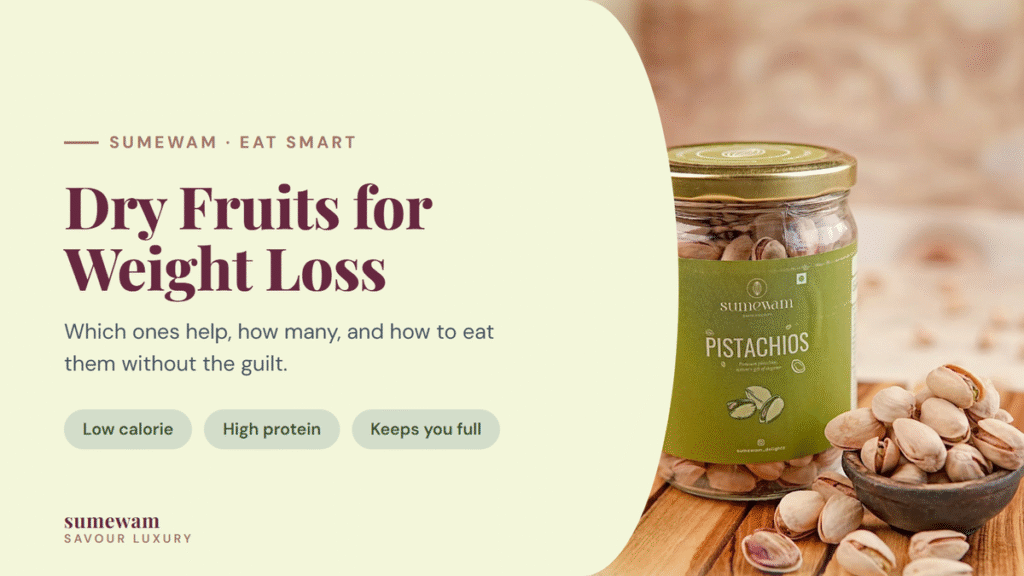
Dry fruits for weight loss do work, as long as you get the portion right. The protein and fibre in nuts keep you full and cut cravings, so you snack less across the day. The trick is to pick lower-calorie options like pistachios and makhana, eat a small measured handful, and skip the sugar-coated kinds.
That is the short answer. Below is the full picture: whether dry fruits really help, the best ones to choose, how to eat them, and the mistakes that quietly stall results.
Do dry fruits help with weight loss?
Yes, when eaten sensibly. Nuts are calorie dense, which sounds like a problem, but their protein and fibre make you feel full, so you eat less overall. Studies from Harvard link regular nut eating with better weight control, not weight gain, because people who snack on nuts tend to reach for less junk. The calories only work against you if the portion runs large.
Best dry fruits for weight loss
Some options are lighter and more filling than others.
| Dry fruit | Why it helps weight loss | Daily amount |
|---|---|---|
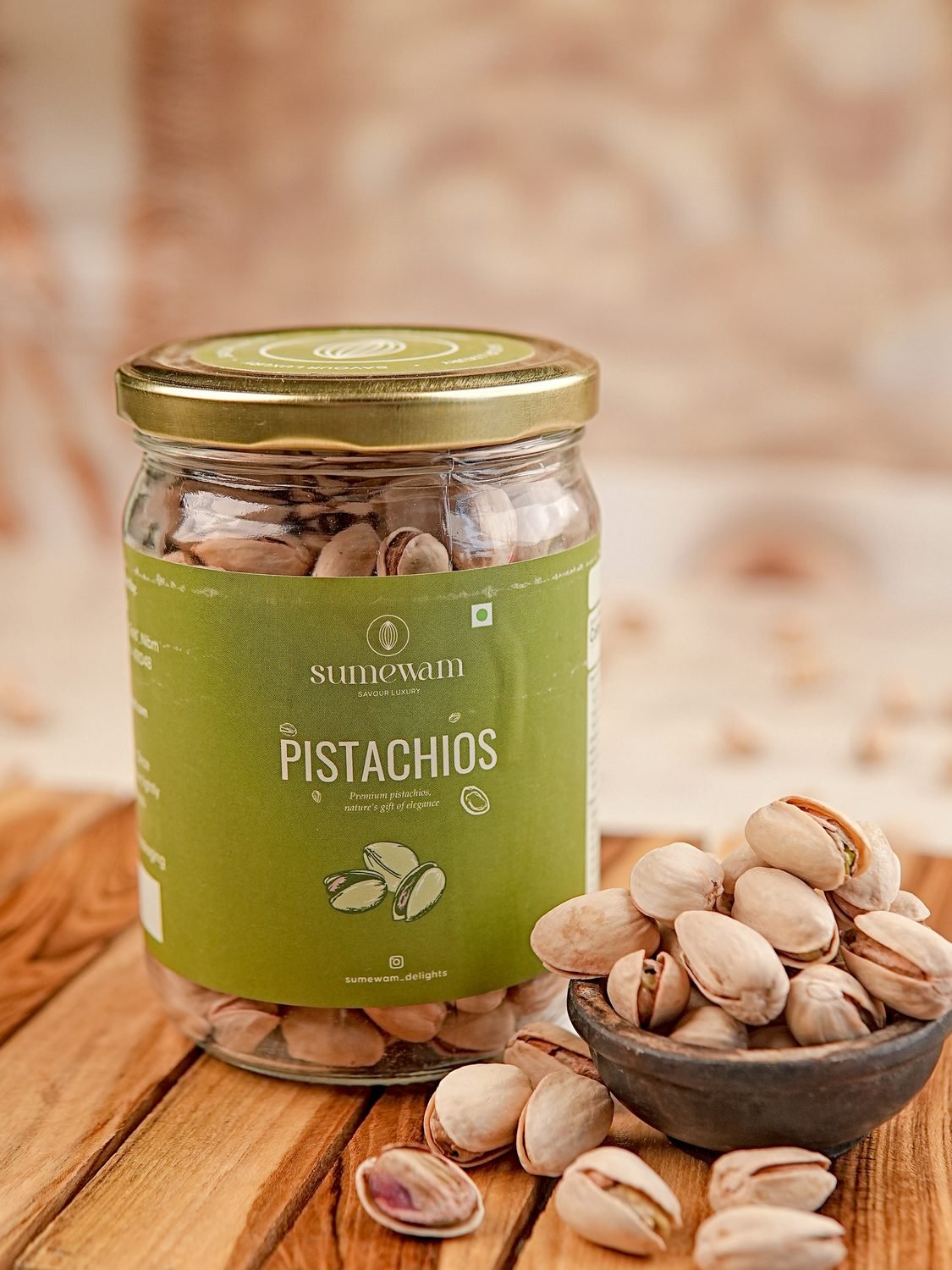
| Pistachios | Lower in calories, high protein, shelling slows you down | A small handful |
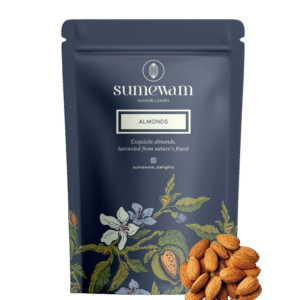
| Almonds | Protein and fibre keep you full for hours | 6 to 8, soaked |
| Walnuts | Omega-3 fats and filling texture | 2 to 4 halves |
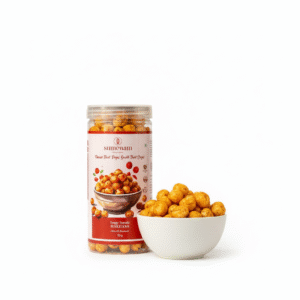
| Makhana | Very low calorie, roasted not fried | A bowl (30 g) |
| Raisins | Clean pre-workout energy in a tiny portion | 8 to 10, soaked |
How to eat dry fruits for weight loss
- Soak them. Soaked almonds and raisins are gentler and easier to absorb. See our guide on how many almonds to eat per day.
- Measure the portion. A small handful, not a bowlful. Count them out instead of eating from the pack.
- Swap, do not add. Replace chips and biscuits with nuts, rather than eating both.
- Time it well. A handful mid-morning or before a workout beats late-night snacking. Our note on the best time to eat dry fruits explains why.
- Choose makhana for volume. When you want to snack more, roasted makhana gives you a bigger portion for very few calories.
Mistakes that quietly stall weight loss
The dry fruit is rarely the problem. The habits around it are.
- Eating straight from the pack, so the portion doubles without you noticing.
- Choosing sugar-coated or fried versions that add empty calories.
- Treating nuts as an extra on top of meals instead of a swap.
Fix those three and dry fruits become one of the easiest tools for staying full while eating less. This ties into the wider benefits of eating nuts daily when the portion is right.
Freshness matters here too
Old, stale nuts taste flat, so you tend to over-salt or over-sweeten them, which defeats the purpose. Fresh nuts are satisfying on their own. Sumewam packs everything in small batches and dates it the day it is packed, so a small handful actually satisfies.
FAQs
Can dry fruits help in weight loss?
Yes, in a controlled portion. The protein and fibre keep you full and reduce snacking, which helps you eat less overall.
Which dry fruit is best for weight loss?
Pistachios and makhana are among the best, since they are lower in calories and very filling. Soaked almonds are also excellent for satiety.
How many dry fruits should I eat a day to lose weight?
Stick to a small handful, roughly 30 grams, or a bowl of makhana. More than that adds calories without extra benefit.
Do dry fruits increase weight?
Only if eaten in large amounts or in sugar-coated, fried forms. A measured daily handful supports weight control rather than gain.
When should I eat dry fruits for weight loss?
Mid-morning or before a workout works best. Avoid mindless late-night snacking straight from the pack.
Snack smarter, not more. Shop fresh, batch dated Sumewam nuts and roasted makhana, portioned for a healthy handful.
Shop what you just read about
Packed and dated the day it ships, never old stock. Delivered across India.